In emergencies, every second counts. A compact, clearly labeled medical ID in your wallet can provide critical information to first responders, caregivers, and bystanders. This article highlights five highly relevant emergency card options that fit standard wallets, come with easy-to-fill fields, and offer durable, readable designs. Read on to compare features, formats, and practical considerations for choosing the best card to keep on hand.
Summary of selected products
| Product | Brand | Format | Notes |
|---|---|---|---|
| RXBC2011 Emergency Medical Information ID Card Pack | RXBC2011 | Card stock, 5-pack | |
| Custom Emergency Contact Wallet Card | ICE | Secure ID, LLC | PVC card with key tag | |
| 4 Pack Emergency Medical Information Id Card Red | DLUGOPIS | Tri-fold card with sleeves | |
| MEDMAX Emergency Medical Information ID Card 10 Pcs | MEDMAX | Flat cards with red header | |
| 25 Emergency Medical Information ID Cards | TENTADO | 3.5″ x 2″ card stock |
RXBC2011 Emergency Medical Information Card (5-Pack)
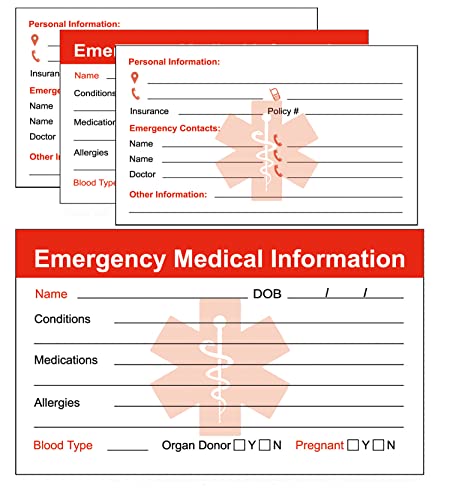
The RXBC2011 card is designed for easy identification and writing. It features a bright red header to stand out in a wallet slot, aiding quick recognition by first responders. Each pack includes five smooth, heavy 14-point stock cards that are straightforward to fill out. While not waterproof, the write-on surface is durable for daily use and long-term retention in a typical wallet. This option balances accessibility with a simple, readable format for vital medical details and emergency contacts.
Custom Emergency Contact Wallet Card | Waterproof ICE Card

This PVC ID card emphasizes instant access to critical information, listing allergies, medications, conditions, and emergency contacts at a glance. A waterproof key tag is included to alert responders to check the card, adding an extra layer of visibility for emergency personnel. The card is sized to fit wallets, purses, or ID holders, ensuring reliable everyday carry without bulk. The combination of a durable build and a clean, legible layout makes it a strong choice for those who want comprehensive data accessible quickly.
4 Pack Emergency Medical Information Card Red (DLUGOPIS)

DLUGOPIS offers a tri-fold red emergency information card with protective sleeves. Each cut-out card measures roughly 3.5″ by 7.9″ and includes eight panels for listing personal data, medical conditions, allergies, and contacts. The red color and Star of Life symbol enhance visibility, making it easier for responders to identify vital information. The four-pack provides multiple copies for family members or caregivers, ensuring ready access across devices and locations.
MEDMAX Emergency Medical Card (10-Pack)

The MEDMAX set provides ten wallet-ready cards featuring a distinctive red header for rapid recognition. These cards are designed for straightforward writing and quick reference during emergencies when communication may be challenging. The large quantity per pack makes them well-suited for families, workplaces, or schools that want to distribute multiple accessible IDs. Durable stock supports daily wear while remaining easy to edit with a pen.
25 Emergency Medical Information ID Cards | TENTADO

The TENTADO value pack provides 25 cards crafted from 500 GSM thick stock, offering durability and a professional finish. Each card measures 3.5″ by 2″, a classic wallet size that slides easily into standard card holders. The round corners help prevent wear and tear, while the dense material supports writing with minimal bleed-through. This option is ideal for individuals needing a large supply for distribution across family members, caregivers, or colleagues.
Buying Guide: Key Considerations For Choosing Emergency Wallet Cards
When selecting the best emergency wallet card, consider how the card will be used day-to-day and in emergencies. Readability, durability, and the ability to convey essential medical details quickly are top priorities. Choose a format (flat card vs. tri-fold) that fits your wallet and skin contact preferences. Look for clear sections for medical conditions, allergies, medications, and emergency contacts. If you want extra assurance, opt for waterproof features or a matching key tag for rapid visibility in all situations. Consider if you need multiple cards for family members or shared environments like workplaces and schools.
Durability and materials matter. A write-on surface helps you customize information, but ensure the material supports smudge resistance and long-term legibility. PVC cards tend to be more water-resistant and durable than paper cards, which can be a factor in wet or high-use settings. For caregivers or children, tri-fold designs with sleeves can protect information while remaining wallet-friendly. For those who want fast identification by responders, bright red headers and the universal Star of Life symbol improve recognition under pressure.
Accessibility is another critical angle. Some cards include an emergency key tag to alert responders who should check for a medical ID. This small addition can bridge the moment between initial contact and accurate information retrieval. If you travel frequently or carry multiple devices, consider a set with several cards (or a pack of sleeves) to ensure you always have a current version stocked in different locations such as wallets, purses, or medical devices.
Cost and value should balance with utility. Bulk packs offer savings if you need many copies for family members, caretakers, or institutions. Review whether the included sleeves, protective covers, or protective sleeves are essential for your use. Finally, evaluate whether you need color-coding or large type for readability in dim lighting or by responders with limited time to glance at the card.