The best 1953 Queen Elizabeth coin depends on whether you want a British coronation-era issue, a Canadian coin featuring her first portrait, or a coin to add to a country-specific collection. The British crown is best for display, while the Canadian 25-cent coin is a strong fit for collectors interested in Queen Elizabeth II and Canadian design. These five listings include coins from both countries; check the listing details and photos to confirm the specific coin and its condition.
| Coin | Best For | Key Detail |
|---|---|---|
| 1953 British crown | Display and coronation themes | Large five-shilling coin |
| Canadian 25 cents | Queen Elizabeth II portrait collectors | First-portrait design |
| British half crown | British coin collections | Seller describes it as worn |
| British florin | Two-shilling coin collecting | Issued under Elizabeth II |
| Canadian 10 cents | Canadian maritime designs | Bluenose sailing ship motif |
1953 British Queen Elizabeth Coronation Crown
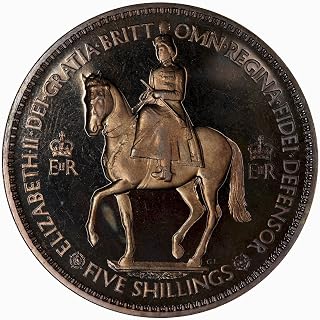
This five-shilling crown is the clearest match for buyers searching for a British Queen Elizabeth coin from 1953. The listing identifies it as a coronation issue and describes it as circulated. Its large size makes it better suited to display than everyday spending.
The design shows Queen Elizabeth II on horseback, with royal cyphers and an inscription around the portrait. On the reverse, shields representing England, Scotland, and Ireland sit around a crown. Choose this coin if you want a substantial British piece with coronation-era imagery and multiple design details.
Best for: Collectors building a display around the 1953 coronation or British crowns. Limitation: The seller describes the coin as circulated, so it may show wear; review the listing photos and condition information before buying.
1953 Canadian 25-Cent Queen Elizabeth Coin

This Canadian quarter is best for buyers seeking a coin that combines an early Queen Elizabeth II portrait with a recognizable Canadian reverse. The listing describes a portrait of the young queen facing right, wearing a wreath, with the Latin inscription “ELIZABETH II DEI GRATIA REGINA.” The reverse features a caribou, the country name, and the denomination.
The product listing covers the 1953–1964 coin type and identifies the 1953 date on the reverse description. Check the actual coin’s date when ordering, because a listing that spans multiple years may not guarantee a particular year unless the seller specifies it.
Best for: Canadian coin collectors and buyers focused on Elizabeth II’s first portrait. Limitation: Confirm the date and condition with the seller if you specifically need a 1953 example.
British Queen Elizabeth II Half Crown

This British half crown is issued under Queen Elizabeth II and is listed as a historical UK coin. The seller describes the coin as circulated or worn. Its date range is 1953–1970, so it may suit a buyer collecting Elizabeth II-era British denominations rather than someone who needs a confirmed 1953 date.
Choose this listing if a half crown is missing from your British coin collection or if you want a circulated example of the denomination. It is less suitable for a date-specific collection unless the seller confirms that the coin being shipped is dated 1953.
Best for: Collectors seeking a British half crown from the early Elizabeth II era. Limitation: The listing indicates worn condition and a multi-year date range, so inspect the listing details for the exact date and visible wear.
British Queen Elizabeth II Florin

The British florin, also called a two-shilling coin, is another option for collecting UK currency issued under Elizabeth II. This listing covers coins dated 1954–1970 and describes them as circulated or worn. Its date range starts after 1953, making it a related Elizabeth II-era collectible rather than a direct match for a 1953-date search.
Best for: Buyers assembling a set of historic British denominations from the queen’s reign. Limitation: This listing does not describe a 1953 coin; choose it only if the later date range fits your collection.
Canadian 10-Cent Bluenose Coin

This Canadian 10-cent listing is described as a silver coin featuring the Bluenose sailing ship motif. The product title gives a 1953–1964 date range, making it a possible companion to the Canadian 25-cent coin for collectors comparing mid-century Canadian designs. The supplied details do not describe the coin’s exact Queen Elizabeth portrait or confirm a specific date.
Best for: Canadian coin collectors interested in maritime imagery and the Bluenose design. Limitation: Verify the date and portrait on the specific coin if those details are essential to your search.
Buying Guide: How To Choose A 1953 Queen Elizabeth Coin
Do you need a coin dated exactly 1953?
Check the date shown on the coin, not just the title’s date range. Of these options, the British crown is identified as a 1953 issue, and the Canadian 25-cent listing describes the 1953 date within a broader 1953–1964 type range. The half crown and florin listings cover broader periods, and the florin range begins in 1954.
Should you choose a British or Canadian coin?
Choose the British crown for a five-shilling coronation-themed coin with royal imagery. Choose the Canadian 25-cent coin for a Queen Elizabeth II portrait paired with a caribou reverse. The Canadian 10-cent coin adds a maritime design, while the British half crown and florin represent different UK denominations.
What condition details should you check?
Two British listings explicitly describe their coins as circulated or worn. Circulated coins can show signs of use, so inspect available photos and seller condition notes. For any listing with a multi-year range, confirm whether the seller can provide the exact date you want.
Frequently Asked Questions
Which listed coin is the closest match for a 1953 Queen Elizabeth coin?
The 1953 British crown is a direct match, and the Canadian 25-cent listing also describes a 1953 example within its broader date range.
Is the Canadian 25-cent coin a British coin?
No. It is Canadian coinage featuring Queen Elizabeth II on the obverse and a caribou on the reverse.
Does the florin listing include a 1953 coin?
No. Its stated date range is 1954–1970.
Which option is described as best for display?
The 1953 British crown listing says the coin is very large and made for display rather than spending.
Should I confirm the date before ordering?
Yes. A listing with a multi-year range may not identify the exact date of the coin provided, so confirm the date when it matters to your collection.